Greta Günther · 24 September 2026
Lunar Gravity Fluctuations and Their Effects on High-Frequency Signal Paths in Polar Regions
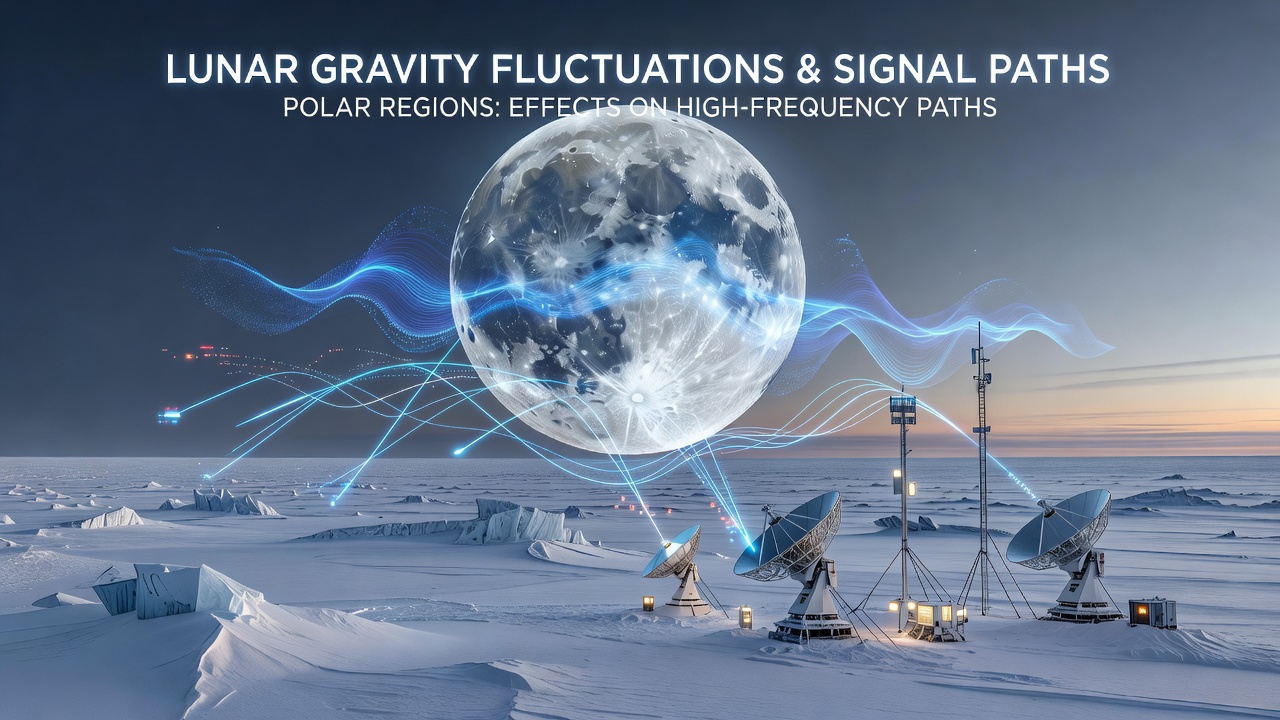
Earth experiences measurable gravitational variations driven by the Moon's orbital position and these fluctuations create subtle but detectable shifts in atmospheric density layers that influence radio wave behavior, and high-frequency signals traveling through polar skies encounter these changes during their refraction cycles through the ionosphere where electron concentrations determine bounce angles and path lengths.
Researchers tracking tidal forces note that lunar gravity produces atmospheric tides alongside oceanic ones, and these atmospheric tides reach the ionosphere where they modulate total electron content by small percentages according to satellite measurements collected over multiple solar cycles.
Gravitational Mechanisms and Ionospheric Response
The Moon's pull varies with its distance and declination angle, creating daily and monthly cycles that compress and expand upper atmospheric gases while the resulting pressure changes alter ionization rates from incoming solar radiation, and data collected by ground-based radar arrays show corresponding adjustments in critical frequencies used for high-frequency communications.
Polar regions experience amplified effects because the geomagnetic field lines stand nearly vertical there, allowing vertical plasma drifts to couple more directly with gravitational perturbations, whereas equatorial zones see more horizontal influences that dissipate energy differently.
High-Frequency Propagation Characteristics in Polar Zones
High-frequency signals between 3 and 30 megahertz rely on ionospheric reflection for long-distance travel, and any shift in layer height or density directly changes skip distances and signal absorption rates, so operators monitoring Arctic and Antarctic circuits record periodic deviations that align with lunar phases rather than solar activity alone.
Studies conducted at Canadian research stations indicate that signal fading events increase when the Moon reaches maximum northern declination, and similar patterns appear in Scandinavian monitoring networks where path loss measurements correlate with predicted tidal maxima.
Measurement Data and Observed Patterns
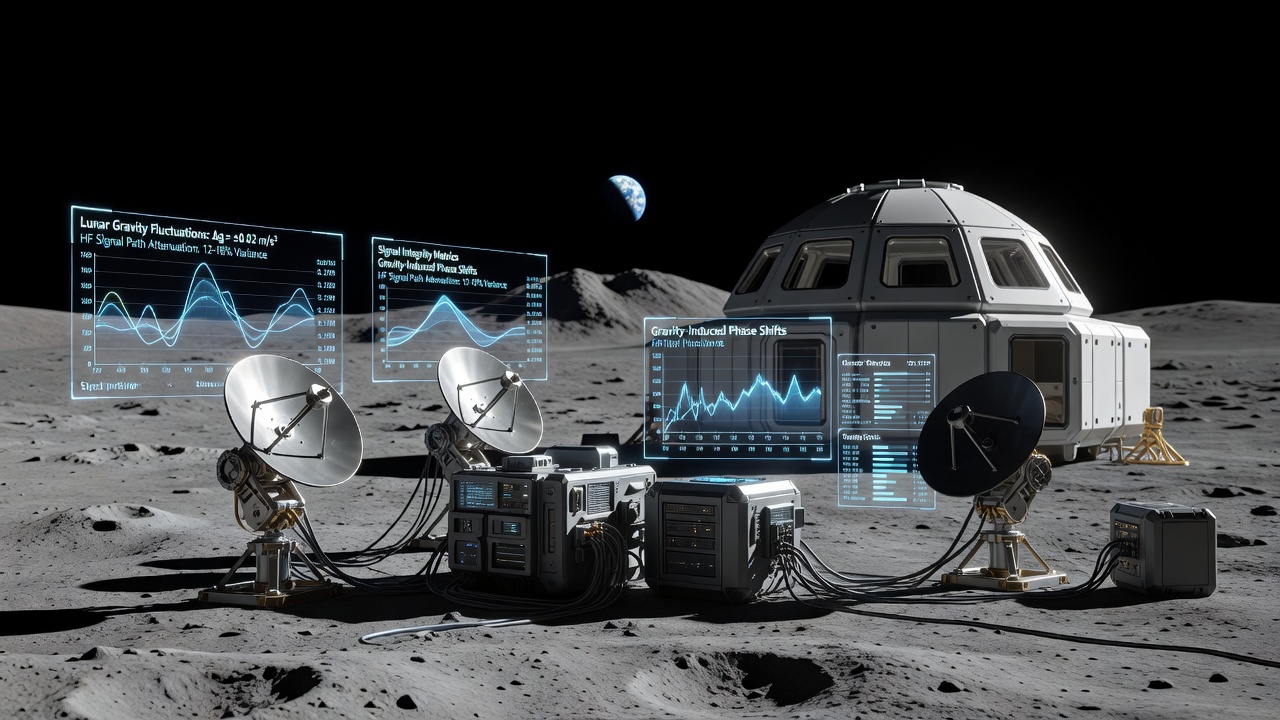
Global networks operated by agencies including the European Space Agency have logged ionospheric total electron content variations of up to 5 percent during peak lunar gravitational alignment, and these figures reveal stronger responses at latitudes above 70 degrees where the field geometry favors vertical coupling, while lower-latitude stations show reduced amplitude.
September 2026 marks the scheduled release of a multi-year dataset from the Australian Antarctic Division that combines HF sounding records with precise gravimetric readings, and preliminary summaries already indicate that lunar-driven density waves contribute measurable jitter to polar signal paths during equinox periods when solar illumination angles maximize ionization contrast.
Practical Implications for Communication Systems
Operators maintaining polar aviation and research links adjust frequency plans and power margins to accommodate these predictable fluctuations, and models incorporating lunar orbital parameters now supplement traditional solar flux indices for improved forecasting accuracy in high-latitude regions.
Equipment at remote outposts records that certain frequencies experience elevated absorption when lunar gravity compresses the lower ionosphere, and the resulting changes force temporary switches to alternate bands or relay paths until the cycle passes.
Conclusion
Continued collection of synchronized gravimetric and radio data across polar networks will refine predictive models, and integration of lunar cycle parameters into propagation software offers operators clearer expectations for signal behavior during future alignments.